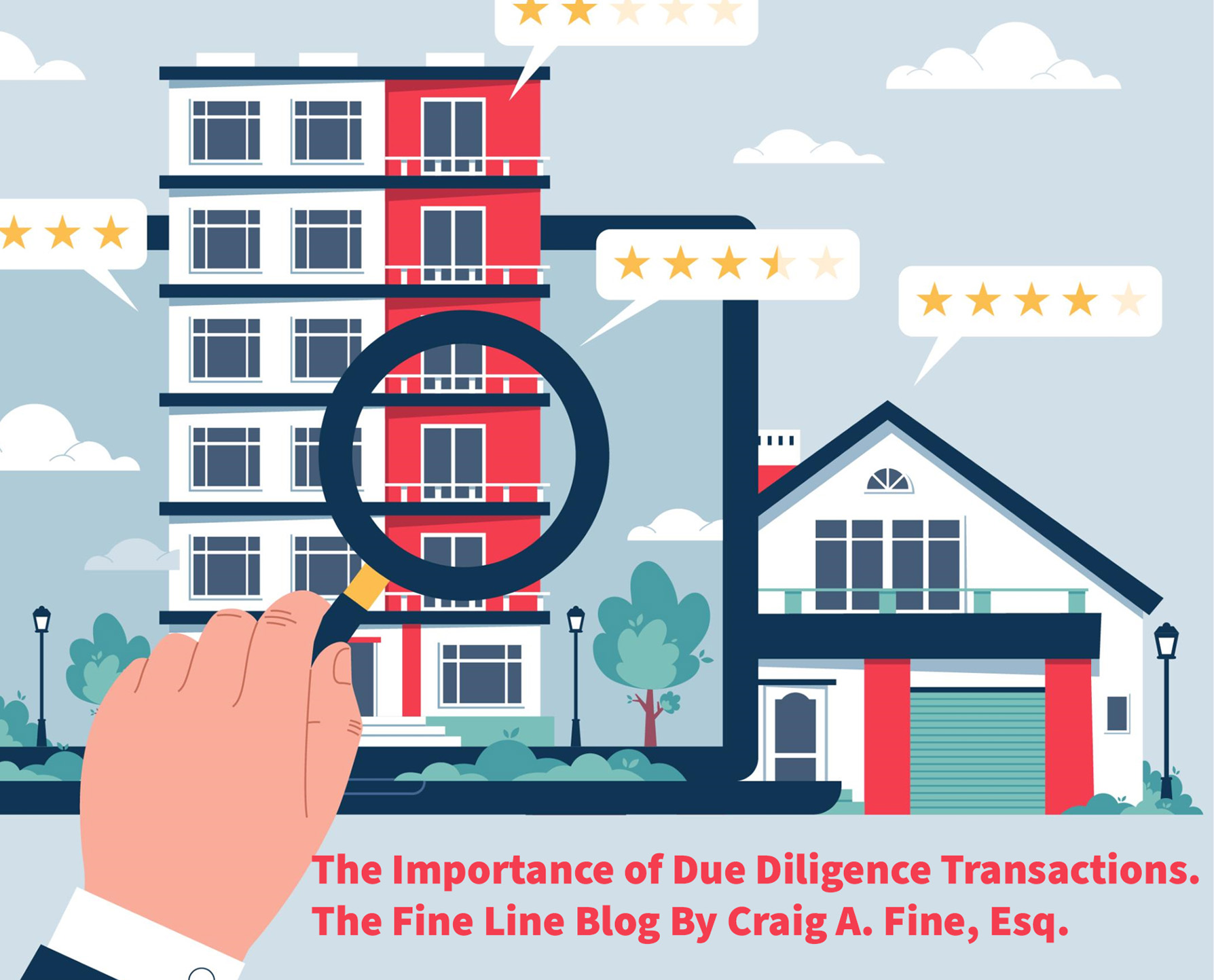
Avoiding Costly Mistakes and Ensuring a Smooth Closing. By Craig A. Fine, Esq.
The Fine Line Blog by Attorney Craig A. Fine. February 3, 2025
As a seasoned real estate attorney, I have seen countless transactions go awry due to a lack of proper due diligence. Whether you are a seasoned investor or a first-time homebuyer, it is essential to understand the importance of due diligence in real estate transactions.

Visit The Law Office of Craig A. Fine, P.C. Schedule a Free Consultation and Subscribe
What is Due Diligence?
Due diligence is the process of researching and verifying the details of a real estate transaction. This includes reviewing property records, inspecting the property, and assessing any potential liabilities or risks. The goal of due diligence is to ensure that the buyer has a complete understanding of the property and any potential issues that may arise. The Fine Line Blog by Craig A. Fine discusses insights to real estate law.
Why is Due Diligence Important?
Due diligence is crucial in real estate transactions because it helps to:
Avoid Costly Mistakes
By conducting thorough research and inspections, buyers can avoid purchasing a property with hidden defects or liabilities.
Ensure a Smooth Closing
Due diligence helps to identify any potential issues that may delay or prevent closing, allowing buyers and sellers to address them proactively.
Negotiate Better Terms
Armed with the knowledge gained through due diligence, buyers can negotiate better terms, such as a lower purchase price or repairs to the property.
Reduce Risk
Due diligence helps to identify potential risks and liabilities, allowing buyers to make informed decisions and minimize their exposure.
What Should Be Included in Due Diligence?
A comprehensive due diligence process should include:
Property Inspections
A thorough inspection of the property to identify any defects or needed repairs.
Review of Property Records
A review of property records, including deeds, titles, and any outstanding liens or encumbrances.
Assessment of Environmental Concerns
An assessment of any potential environmental concerns, such as lead-based paint or asbestos.
Review of Local Zoning and Land-Use Regulations
A review of local zoning and land-use regulations to ensure compliance.
Inspection of Mechanical Systems
An inspection of mechanical systems, including plumbing, electrical, and HVAC.
Conclusion
Due diligence is a critical component of any real estate transaction. By conducting thorough research and inspections, buyers can avoid costly mistakes, ensure a smooth closing, and negotiate better terms. As a seasoned real estate attorney, I strongly advise all buyers to prioritize due diligence in their transaction. If you have any questions or concerns about due diligence or real estate transactions in general, please do not hesitate to (link unavailable).
At The Law Office of Craig A. Fine, P.C., we have extensive experience guiding clients through the due diligence process and ensuring that their rights are protected. (link unavailable) today to learn more about how we can assist you with your real estate transaction.
About the Author Craig A. Fine, Esq.
Craig A. Fine, Esq. is a seasoned real estate attorney with extensive experience in all aspects of real estate law, including transactions, litigation, and land use. He is the founder of the (link unavailable) and is admitted to practice in New York, New Jersey, and Florida.