
Office-to-residential conversions in NYC are becoming a major real estate topic as policymakers, developers, property owners, investors, lenders, and housing professionals look for ways to reuse underused commercial buildings and increase housing supply. The Fine Line Blog by Craig A. Fine, Esq. provides short legal insights on real estate law, business law, landlord-tenant matters, housing policy, litigation, wills, trusts, and estate planning for readers across New York, New Jersey, and Florida.
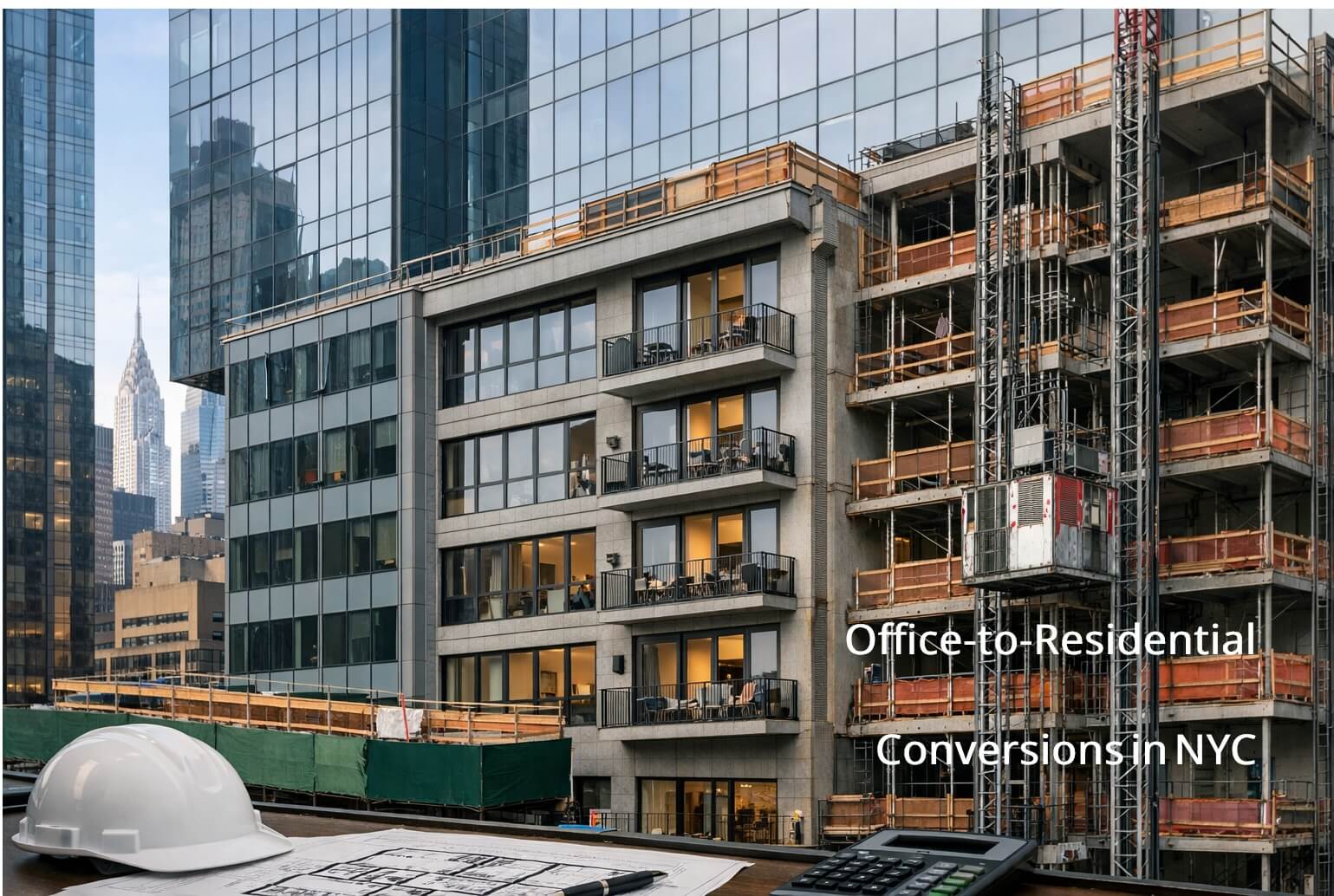
Office-to-Residential Conversions in NYC and Real Estate Planning
Office-to-residential conversions in NYC may create opportunities for owners of older commercial buildings, developers seeking housing projects, lenders reviewing repositioned assets, and investors evaluating future rental demand. But converting an office building into apartments is not simply a design decision. It can involve zoning, building code compliance, financing, title review, construction contracts, tax incentives, affordable housing requirements, leasing strategy, and long-term operating risk.
New York City’s Office Conversion Accelerator is designed to help eligible office building owners evaluate zoning feasibility, identify conversion barriers, and navigate permitting pathways. Separately, the City’s 467-m Affordable Housing from Commercial Conversions program may provide tax incentives for qualifying commercial-to-residential conversion projects that meet program requirements.
Office-to-Residential Conversions in NYC: Legal Issues to Review
Before moving forward, owners and investors should review zoning, permitted use, title conditions, financing documents, existing leases, tenant relocation issues, construction agreements, insurance, environmental concerns, tax incentive eligibility, affordable housing obligations, and timelines for approvals. A conversion project can fail financially if the legal documents, building conditions, or approval path do not support the business plan.
For buyers, lenders, and investors, due diligence should happen before contract signing or major capital commitment. Important questions include whether the building layout supports residential use, whether required approvals are realistic, whether existing leases block redevelopment, and whether tax benefits depend on affordability, wage, timing, or compliance requirements.
Craig A. Fine, Esq. advises clients on real estate transactions, business law, landlord-tenant matters, contracts, litigation, wills, trusts, estate planning, and legal risk management. For related guidance, visit The Law Office of Craig A. Fine, P.C. real estate law page or learn more about Craig A. Fine, Esq..

About The Fine Line Blog by Craig A. Fine, Esq.
The Fine Line Blog by Craig A. Fine, Esq. is a legal insights platform covering real estate law, business law, landlord-tenant matters, housing issues, litigation, wills, trusts, and estate planning. The blog supports the primary law firm website with short, practical legal updates for readers across New York, New Jersey, and Florida.
About Craig A. Fine, Esq.
Craig A. Fine, Esq. is a real estate and business attorney licensed in New York, New Jersey, and Florida. Through The Law Office of Craig A. Fine, P.C., he advises clients on real estate transactions, business law, landlord-tenant matters, contracts, litigation, wills, trusts, estate planning, and legal risk management.
About The Law Office of Craig A. Fine, P.C.
The Law Office of Craig A. Fine, P.C. provides legal representation in real estate law, business law, landlord-tenant matters, commercial and civil litigation, wills, trusts, and estate planning. The firm serves clients across New York, New Jersey, and Florida with practical legal guidance focused on transactions, contracts, disputes, planning, and legal risk.
#craigafineesq #lawfirm #thefinelineblog #RealEstateLawyer #AffordableHousing #ContractReview #attorneyatlaw #nylawyer #njlawyer #FLLawyer #statenisland #statenislandrealestate #brooklynrealestate #manhattanrealestate #queensrealestate #bronxrealestate #njrealestate #floridarealestate
Attorney Advertising. This content is for general informational purposes only and does not constitute legal advice. Prior results do not guarantee a similar outcome.